
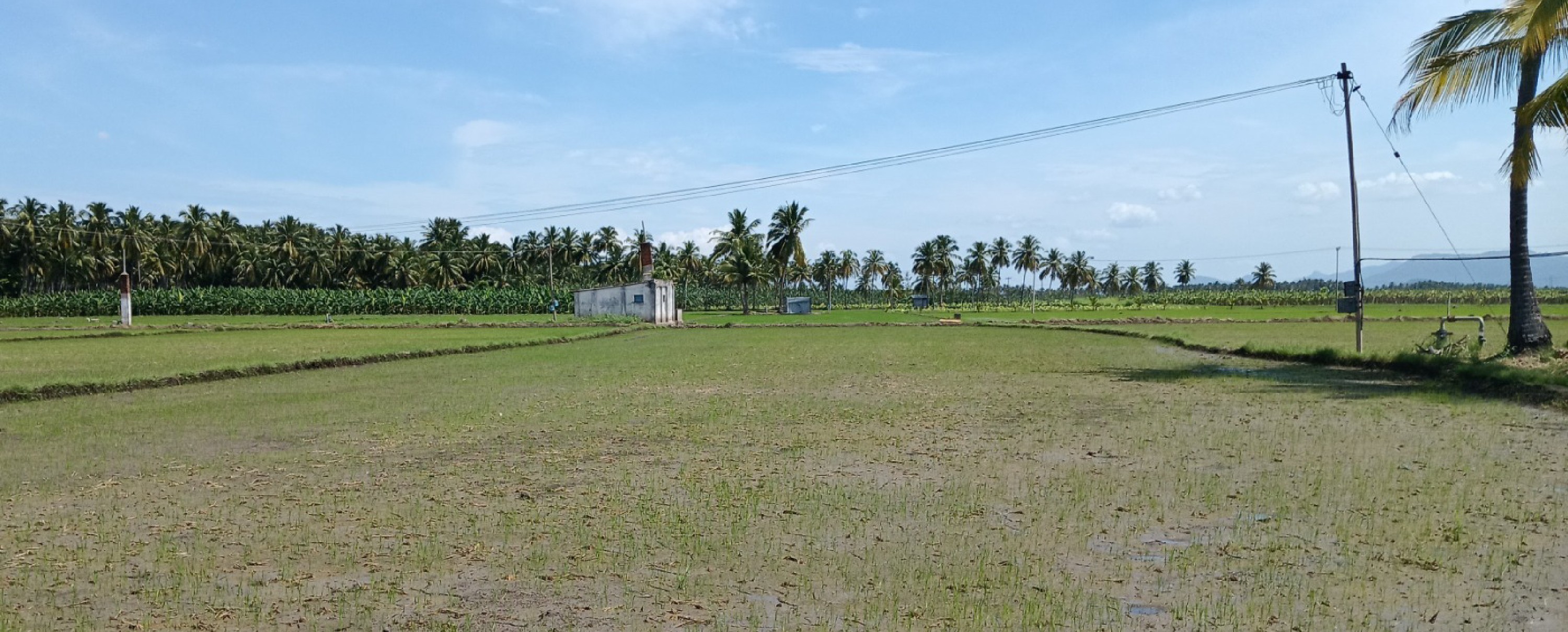
When the Rains Failed Him, This Farmer Found Answers in Science
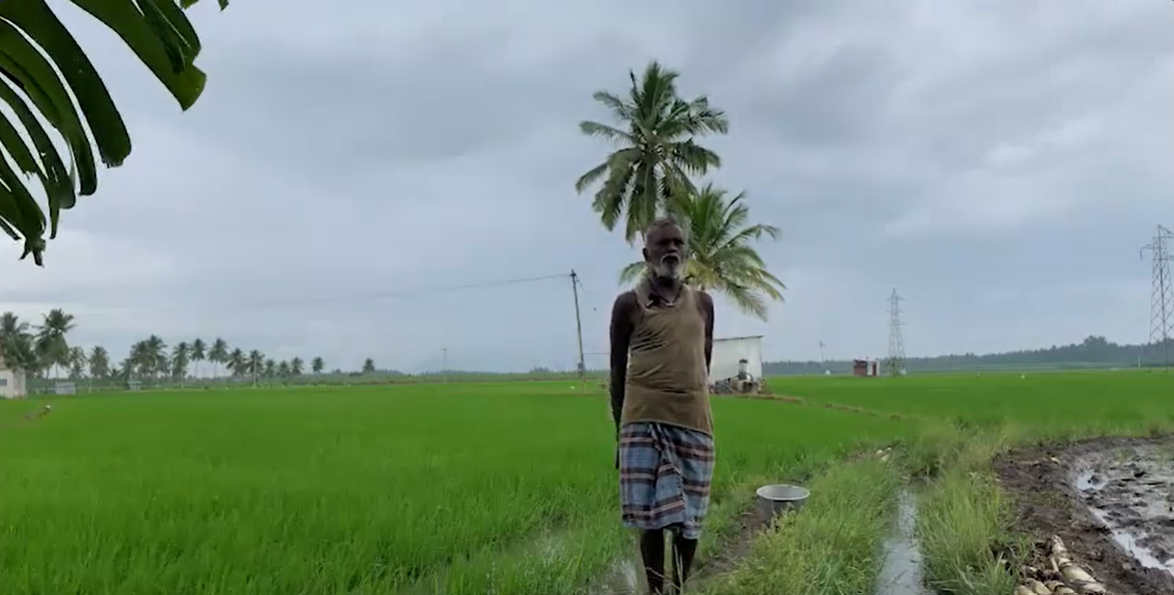
After an unseasonal rainfall destroyed his paddy crop in November last year, 65 year old Marimuthu from Tamil Nadu’s Theni district decided he could no longer rely on the old farming practices alone. He began using simple, science-based methods for water and crop management not just improving the crop and soil health but also his yield.
Starting as an agricultural labourer Marimuthu, who lives in the Vadugapatti village, worked in harvesting betel leaves in fields he did not own. About 15 years ago, he invested his savings to buy three acres of land and began cultivating paddy. That hard won stability was shaken in November 2025, when unseasonal rainfall caused severe crop damage and sharp income losses. For Marimuthu, the growing vulnerability of farming amid climate variability prompted him to seek better water and crop management strategies.
A promising innovation
Through his local Water User Association, Marimuthu learnt that the M.S. Swaminathan Research Foundation (MSSRF) was organising a training programme on Alternate Wetting and Drying (AWD), a climate smart irrigation method for paddy.
AWD is a water-saving practice for rice that reduces water use by up to 30% and can save farmers money on irrigation and pumping costs. Research has indicated that AWD reduced methane by 30% – 40% without reducing yield. Its cost effectiveness and simple implementation have encouraged its adoption for farmers like Marimuthu.
After the training session, he cultivated paddy by following AWD’s need-based irrigation approach. Using a ‘field water tube’ or ‘Pani Pipe’ provided by MSSRF’s training team, Marimuthu controlled the water levels in his field.
“I learnt that I need one inch of water to prevent sheath blight disease and three inches of water to control rat infestation. That knowledge and the Pani Pipe helped me control the health of my field even when water was scarce”, said Marimuthu.
By shifting away from continuous flooding to AWD, Marimuthu was able to better balance crop health with efficient water use.
A Record-Breaking Yield
From a modest 1,200 kg per acre the previous season, Marimuthu recorded a striking turnaround, harvesting 3,000 kg per acre. The jump translated into profits of about ₹1.1 lakh from the harvest.
“This was one of the highest yields in my lifetime,” he said, noting that the results surpassed even those achieved nearly a decade ago, when weather conditions were far more favourable.
Marimuthu’s farming journey has been marked by steady adaptation and a willingness to embrace new methods. Despite having no formal education, he has built a strong, experience based understanding of agriculture, learning to respond to shifting conditions with practical solutions.
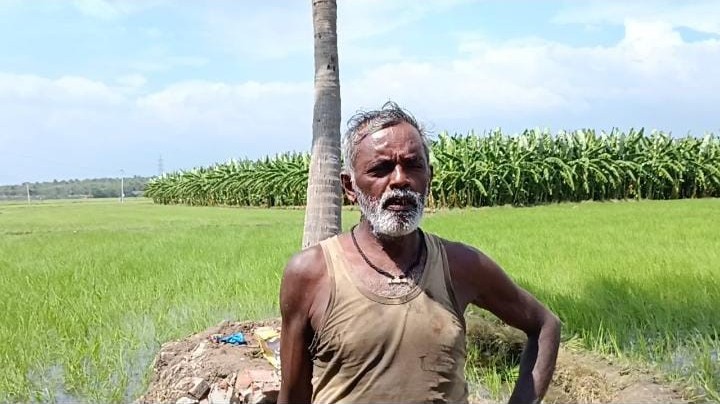
Techniques such as Alternate Wetting and Drying are helping make farming more climate resilient in fragile landscapes like the Varagha–Vaigai basin, where cultivation depends heavily on canal water supplemented by groundwater.
Today, Marimuthu has become an advocate for change within his community. He actively encourages and guides neighbouring farmers to adopt AWD, sharing lessons from his own experience. As the benefits of his approach become visible in the fields around him, more farmers are beginning to follow suit, creating a ripple effect that points to the power of farmer led innovation in responding to climate risk.
Mr. A. Jeevanandham is an Associate Scientist, Horticulture, MSSRF. Mr. P. Gopalakrishnan is an Associate Scientist, GIS, MSSRF.