
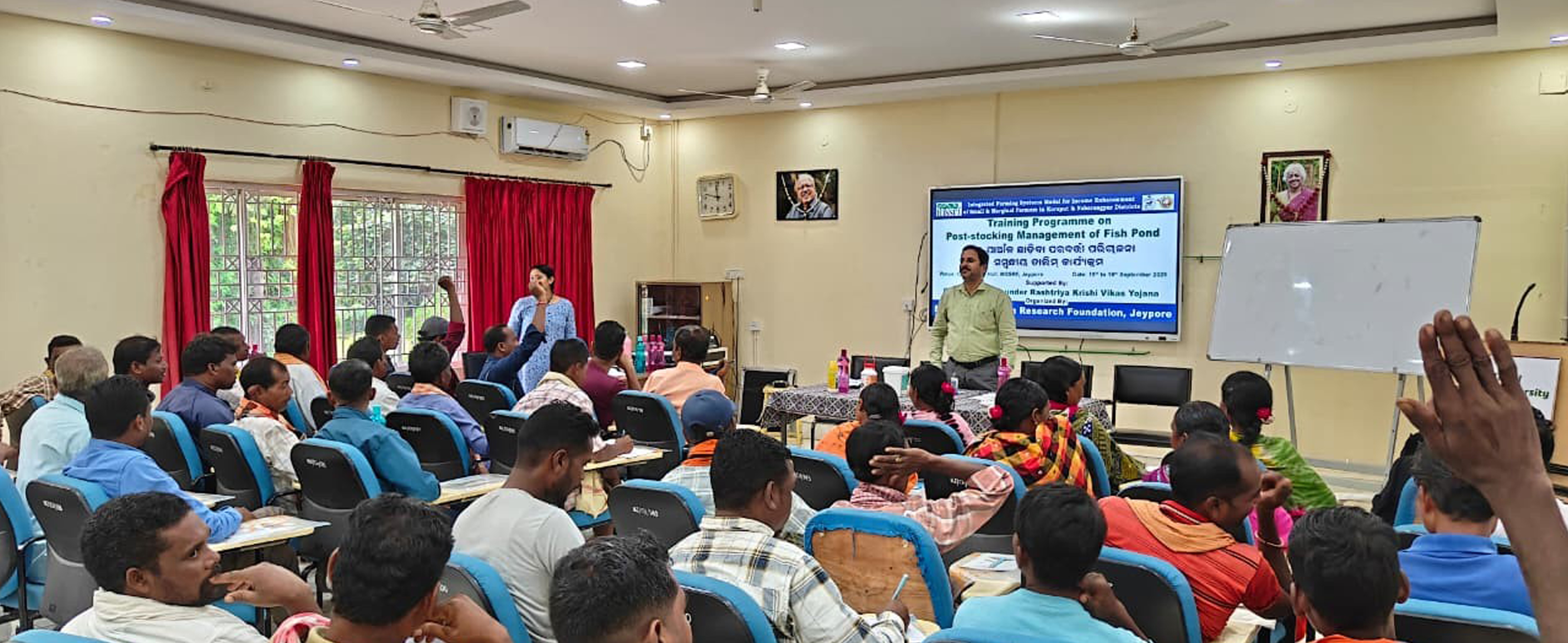
MSSRF Hosts Fish Pond Management Training for Aquaculture Farmers in Odisha
Tribal Agrobiodiversity Centre, the regional centre of M. S. Swaminathan Research Foundation (MSSRF) in Odisha organised a series of four training programmes on Post-Stocking Management of Fish Ponds from 15th to 18th September 2025 under the Integrated Farming System project, supported by the Government of Odisha through the Rashtriya Krishi Vikas Yojana (RKVY). A total of 163 aquaculture farmers from Boipariguda block of Koraput district and Kosagumuda block of Nabarangpur district actively participated in the training.
The training programme aimed to strengthen farmers’ abilities to adopt scientific practices for sustainable inland aquaculture. It began with an introduction to the objectives and significance of post-stocking management, underscoring its role in ensuring healthy fish production. A pre-training assessment was conducted to gauge participants’ existing knowledge before moving into technical sessions.
The resource persons explained the preparation of plankton and the critical role of dissolved oxygen in pond health. The participants were trained on methods to detect low dissolved oxygen levels, adopt corrective measures, and use aerator machines alongside traditional practices to enhance oxygen availability.
The sessions highlighted disease prevention, monthly pond maintenance protocols, local fish feed preparation and feeding schedules, as well as fish health management. Farmers were trained to identify disease symptoms, apply appropriate medicines, and adopt preventive practices. The farmers got to learn how plantations around the ponds can improve the ecosystem and provide additional sources of income.
In addition, participants were briefed on various government schemes supporting fisheries and aquaculture development. The programme concluded with a post-training assessment and feedback session, which revealed key learnings such as the importance of water quality monitoring, disease prevention, growth monitoring, record-keeping, and efficient feed management. Through these sessions, farmers gained not only technical expertise but also practical insights that will enable them to improve productivity, sustainability, and income from aquaculture.