
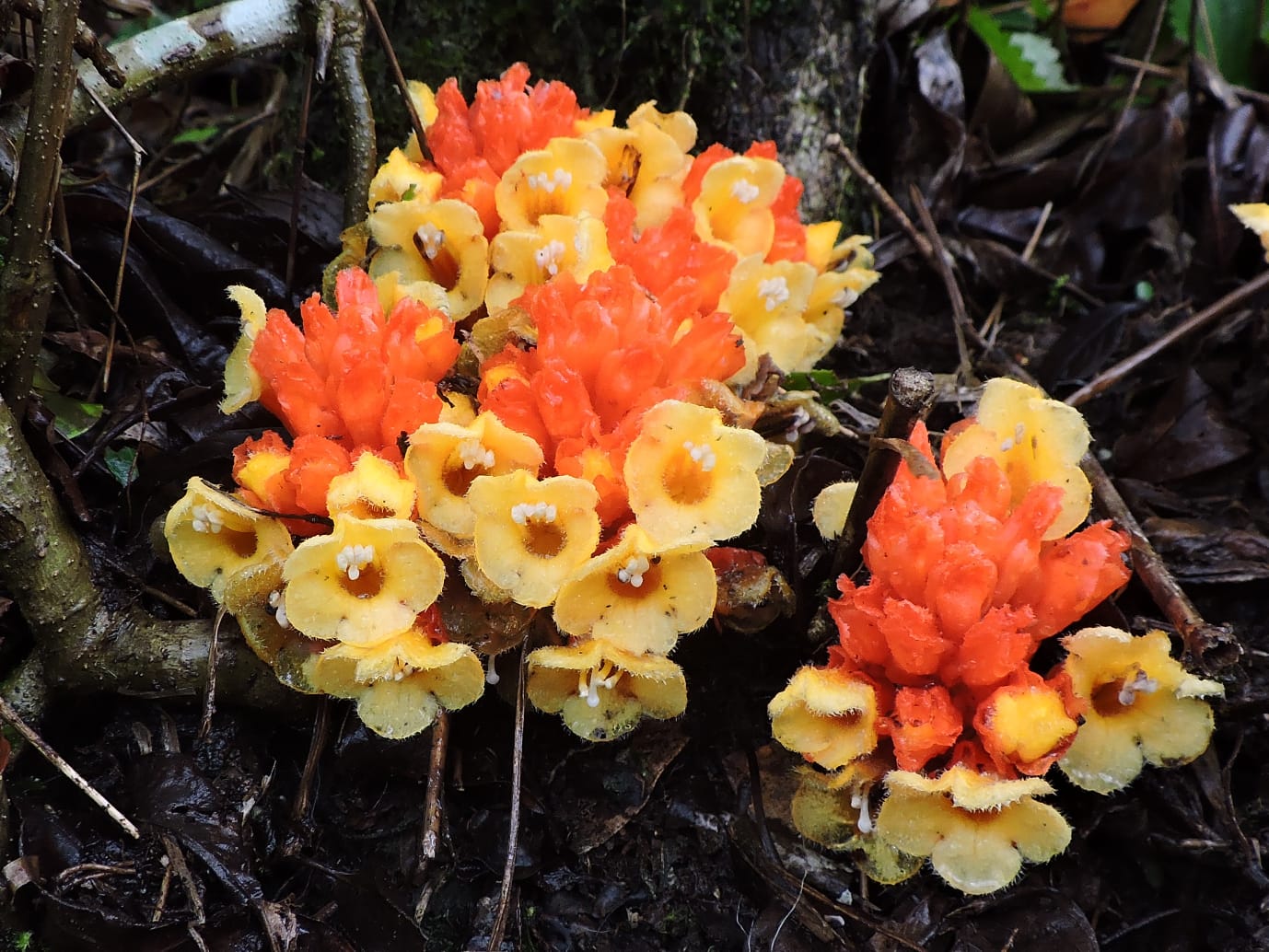
Parasitic Plant Presumed Extinct Rediscovered in Wayanad After 175 Years
A flowering root-parasitic plant, long believed to be extinct, has been rediscovered in the Thollayiram area of Wayanad in Kerala after more than 175 years. The species has been identified as Campbellia aurantiaca, a member of the Orobanchaceae family.
The plant was originally collected and described by Robert Wight from Naduvattam, Tamil Nadu, in 1849, and had not been sighted since. Its prolonged absence led to widespread misinterpretation within the scientific community, with many assuming it was synonymous with Christisonia bicolor, a species found in the Western Ghats and Sri Lanka.
During his field work, Salim Pichan, a parataxonomist and Senior Technical Assistant from the M. S. Swaminathan Research Foundation (MSSRF), came across a few vibrant orange clumps of a parasitic species thriving in humus-rich, moist, shady soil in the Thollayiram area. After careful verification of the specimen, P. T. Arunraj, an angiosperm taxonomist specialising in the Orobanchaceae family of the Western Ghats confirmed that the plant described by Wight and this species taxonomically matched.
Mr. Pichan’s rediscovery has been published in the Kew Bulletin, the official journal of the Royal Botanic Gardens, Springer Nature.
In addition to Mr. Pichan, the research team that led to the significant discovery and publication of this paper included Mr. Arunraj, Dr. Jose Mathew, and Dr. V. N. Sanjai from the Department of Botany at Sanatana Dharma College, Alappuzha, and B. Gopallawa from the University of Peradeniya in Sri Lanka.
According to Mr. Pichan, this fully parasitic flowering plant derives essential nutrients from the roots of a specific Kurinji species and has a remarkably short lifespan of only a few weeks. The rediscovery site is less than five kilometres from Chooralmala and Mundakkai areas that were recently devastated by landslides, highlighting the critical need for conservation in the ecologically sensitive regions of the Western Ghats.
Pic: Campbellia aurantiaca