
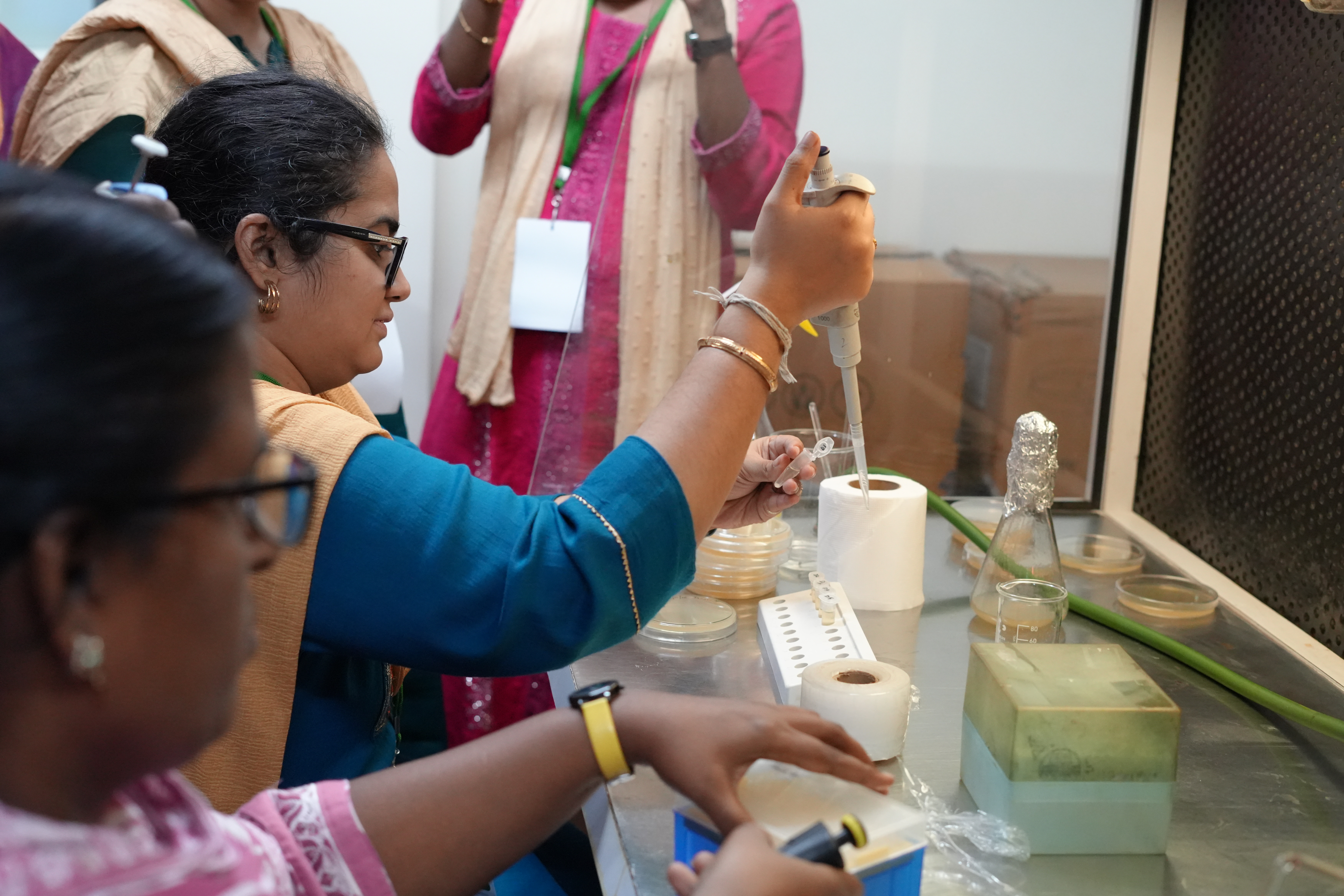
Teachers exposed to practical genetics practices to improve learning outcomes for students
The MS Swaminathan Research Foundation (MSSRF), in partnership with the XV Genetic Congress Trust, organised a two-day workshop on Genetics for postgraduate biology teachers on 29 and 30 October.
Around 20 postgraduate biology teachers from private, and government-aided institutions across Chennai participated in the programme, which was designed and developed by MSSRF scientists from the Biotechnology group.
The workshop aims to strengthen teachers' conceptual understanding of genetics while equipping them with practical knowledge of modern molecular biology techniques. It introduces educators to the latest advances in genetics and biotechnology, helping them stay abreast of rapid developments in these fields and enhance their classroom teaching.
“For teachers handling Classes 11 and 12, this workshop is extremely useful because most of us would have studied these concepts a long time ago, often only in theory. When students ask questions, having performed these techniques ourselves enables us to explain the concepts more effectively, as we have seen the processes firsthand,” said Ms S. Hannah, Biology teacher at Sishya OMR School.
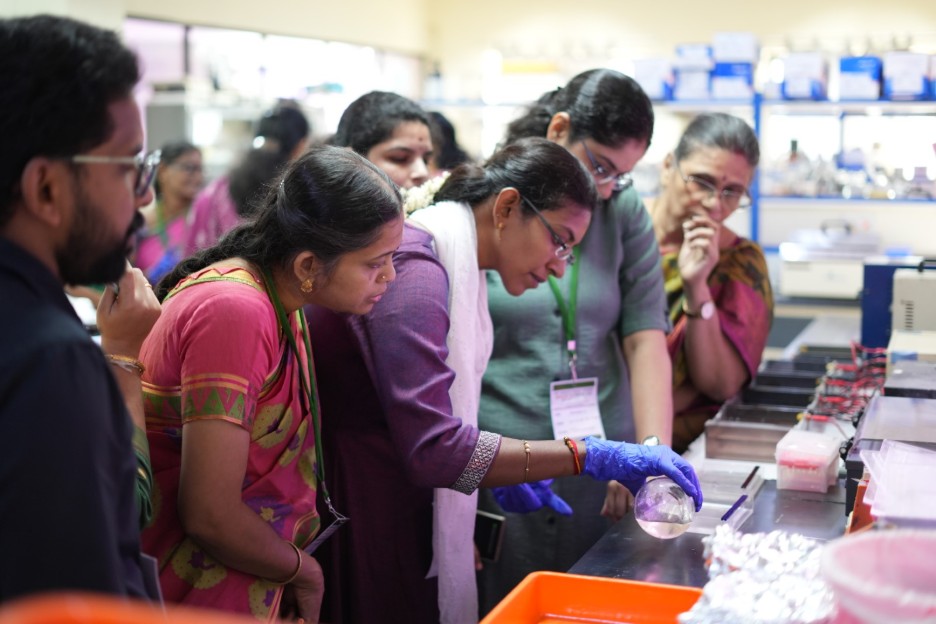
The workshop featured a combination of theoretical and hands-on sessions led by researchers from the Indian Council of Agricultural Research (ICAR), and MSSRF. Through these sessions, participants gained exposure to both fundamental concepts and contemporary applications in genetics and molecular biology.
During the inauguration, Dr Akshay Talukdar, Principal Scientist, Genetics Division, ICAR, traced the long-standing association between the XV Genetics Congress Trust and MSSRF. Recalling the first Genetics Congress held in 1983 under the chairmanship of Prof. M.S. Swaminathan, he noted that the event attracted more than 2,000 participants, including six Nobel laureates. Following the success of the congress, the XV Genetics Congress Trust was established with the mission of “popularising genetics for the welfare of humanity.”
“We want more M.S. Swaminathans. Only teachers can make that happen,” he added.
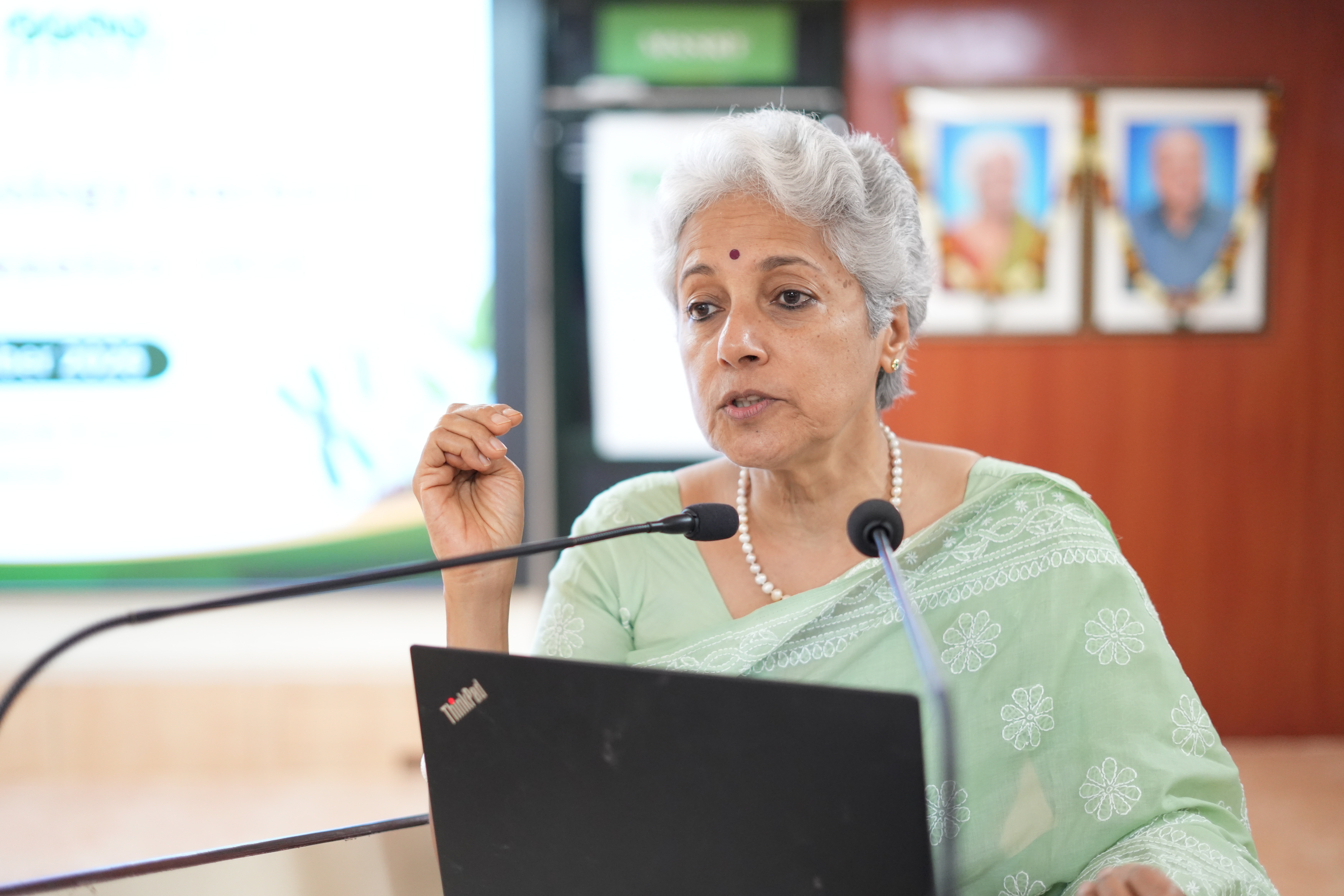
Dr Soumya Swaminathan echoed this sentiment, emphasising the importance of science education in shaping the future. “STEM is the future, and we want more children to be excited by it,” she said. Noting that advances in science, technology, engineering, and mathematics have driven the development of nations around the world, she added, “Science, technology, and innovation are the future.”
Lakshmi Kanth Bharati / MSSRF
The teachers expressed concern about a declining interest in Biology among students. The teachers feel that uptake of Biology is low because many students are unaware of the career opportunities available beyond medicine. It is also viewed as a difficult subject.
Ms Thenmozhi S., a teacher from Ramakrishna Mission Matriculation Higher Secondary School, noted that genetics is often one of the more challenging topics for students to grasp. “When I teach Mendelian concepts, I can point to visible traits such as a widow’s peak, but I cannot show students DNA,” she said.
She added that the hands-on experience gained through the workshop would help her make genetic concepts more tangible in the classroom. By drawing on the practical insights and techniques demonstrated during the programme, she hopes to spark greater curiosity and interest in the subject among her students.
Lakshmi Kanth Bharati / MSSRF
“The sessions were very interesting,” said Ms Jolly Verghese from Jawahar Vidyalaya Senior Secondary School. She noted that, while many schools may not have access to advanced laboratory infrastructure, students could greatly benefit from exposure to such practical learning experiences.
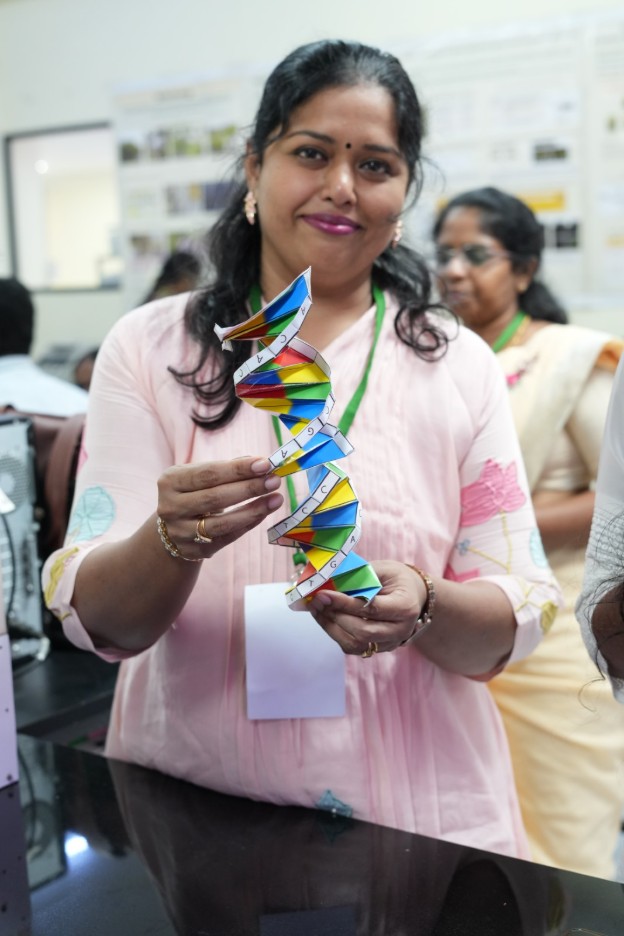
The workshop combined theoretical and hands-on sessions, including a DNA origami activity designed to help participants visualise the structure of DNA. Holding up her folded DNA model, one teacher enthusiastically remarked, “I’m going to use DNA origami in my classroom too!”
Lakshmi Kanth Bharati/ MSSRF
The workshop forms part of MSSRF’s broader efforts to strengthen science education, build scientific temper among young learners, and foster closer linkages between academic research and school classrooms.